
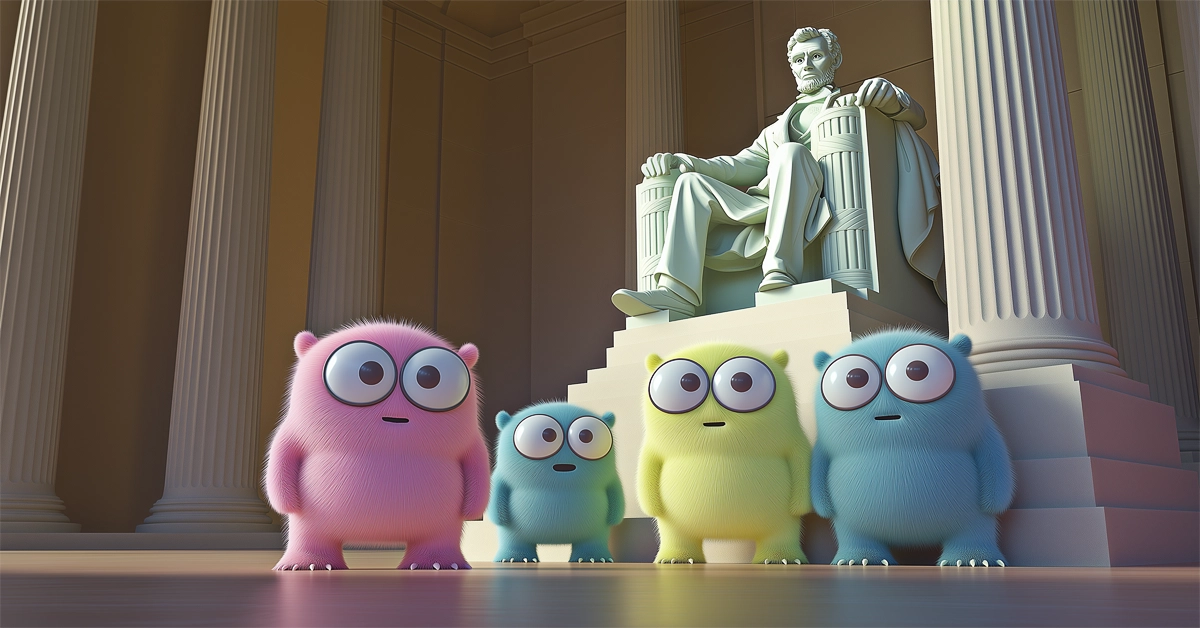
Abraham Lincoln wasn't born a president. He was born to a poor frontier family, given almost no formal education, and raised in a house with one window. By every measure, the odds were against him.
And yet: he became one of the greatest leaders in history.
Not because he was the smartest. Not because he had the best teachers or the easiest life. But because of how he thought, how he failed, how he tried again, and how he grew.
Your gifted child has something in common with young Abe: a mind that wonders, reaches, and asks harder questions. And Lincoln's life can teach your child something real about what to do with that mind.
Trait #1: Perseverance Through Impossible Odds
Abraham Lincoln failed a lot.
His store went bankrupt. He ran for public office and lost. He suffered deep depression. His wife struggled with mental health. His political opponents called him a fool, a coward, a failure.
He could have stopped. Instead, he kept trying.
Your gifted child will face failure too. Maybe not bankruptcy, but something that feels enormous to them: a math problem they can't solve, a teacher who doesn't understand them, a peer who doesn't get their jokes, a creative project that doesn't turn out like they imagined.
The gifted brain is wired to notice problems, to want things to be right, to push for excellence. This is a gift. But it also makes failure hurt more.
Lincoln shows us: failure isn't the end. It's information. Keep going.
Talk to your child about this directly: "Lincoln failed many times before he became president. And every time he failed, he learned something. Failure just means you're trying to do something that matters."
Trait #2: Relentless Curiosity
Lincoln's formal schooling lasted only about a year. But he was hungry to learn.
He read everything he could: Shakespeare, the Bible, history, law, mathematics. He taught himself. He asked everyone around him endless questions. He noticed how things worked.
Your gifted child does this too. They ask "why" constantly. They read voraciously. They have intense interest in specific topics. Sometimes adults get tired of the questions, or tell the child to "stop asking so much."
Don't. That curiosity is fuel. Lincoln's self-education made him into the person he became.
The way to nurture it: let your child's curiosity lead. If they want to deep-dive into Lincoln, let them. If they want to learn to code, Egyptian history, insect biology, or rocket science - feed it. Bring them books. Take them to libraries. Say "that's a great question, let's find out together."
Curiosity isn't annoying. It's the beginning of mastery.
Trait #3: Empathy That Broadens Perspective
Lincoln grew up in a slave state, but his conscience told him slavery was wrong. He spent years wrestling with this conflict, reading different perspectives, talking to people, thinking about what justice meant.
He didn't start as a perfect abolitionist. He grew into it. Through empathy: trying to understand people different from himself, imagining their suffering, expanding his own worldview.
Your gifted child often has deep empathy. They notice when things are unfair. They feel strongly about injustice. Sometimes their empathy is so strong it overwhelms them.
Lincoln shows us: empathy is a tool for understanding the world more deeply. It's not weakness. It's wisdom.
Supporting their empathy means not shutting down their big feelings about injustice or suffering. Instead, ask: "What do you think should happen?" "How could we help?" "What would it feel like to be in that situation?" Help them channel their empathy into understanding, and later, into action.
Trait #4: Resilience Through Grief and Loss
Lincoln lost his mother at age 9. He lost his first love. He lost elections. He lost his young son, Willie, while serving as president.
Any of these losses might have broken a person. Lincoln carried all of them.
He didn't get over the grief. He learned to carry it. He spoke about it openly. He let it teach him about human suffering. He used his understanding of loss to be more compassionate with others.
Your gifted child will face loss and grief too. And often, because of their intensity and depth of feeling, they will grieve hard. They notice things others miss. They feel things others don't name.
Help them see what Lincoln knew: grief is evidence of love. Carrying sadness is part of being human. And it makes you more understanding of others' pain.
Trait #5: Self-Education and Humble Learning
Lincoln never stopped learning. Even as president, he read. He surrounded himself with smart people who disagreed with him. He asked questions. He changed his mind when evidence suggested he should.
Your gifted child is hungry to learn in the same way. But sometimes they get the message that "being smart" means already knowing things, not asking for help, moving fast.
Lincoln shows us the opposite: true learning is a lifetime practice. Smart people ask questions. Wise people change their minds.
Model this yourself: "I don't know the answer to that, let's figure it out together." "I used to think X, but now I think Y because..." "That's a smart observation. I hadn't thought about it that way."
One More Thing: The Loneliness
Lincoln was lonely. His mind worked differently from most people's. His ambitions were outsized. His inner life was rich and complicated.
Many gifted kids feel this loneliness. They feel different. They wonder if anyone really gets them.
Here's what's true: Lincoln's difference was what made him able to lead the nation through crisis. His unusual mind. His deep thinking. His big vision.
Your gifted child's difference isn't something to outgrow. It's something to understand, accept, and eventually use.